
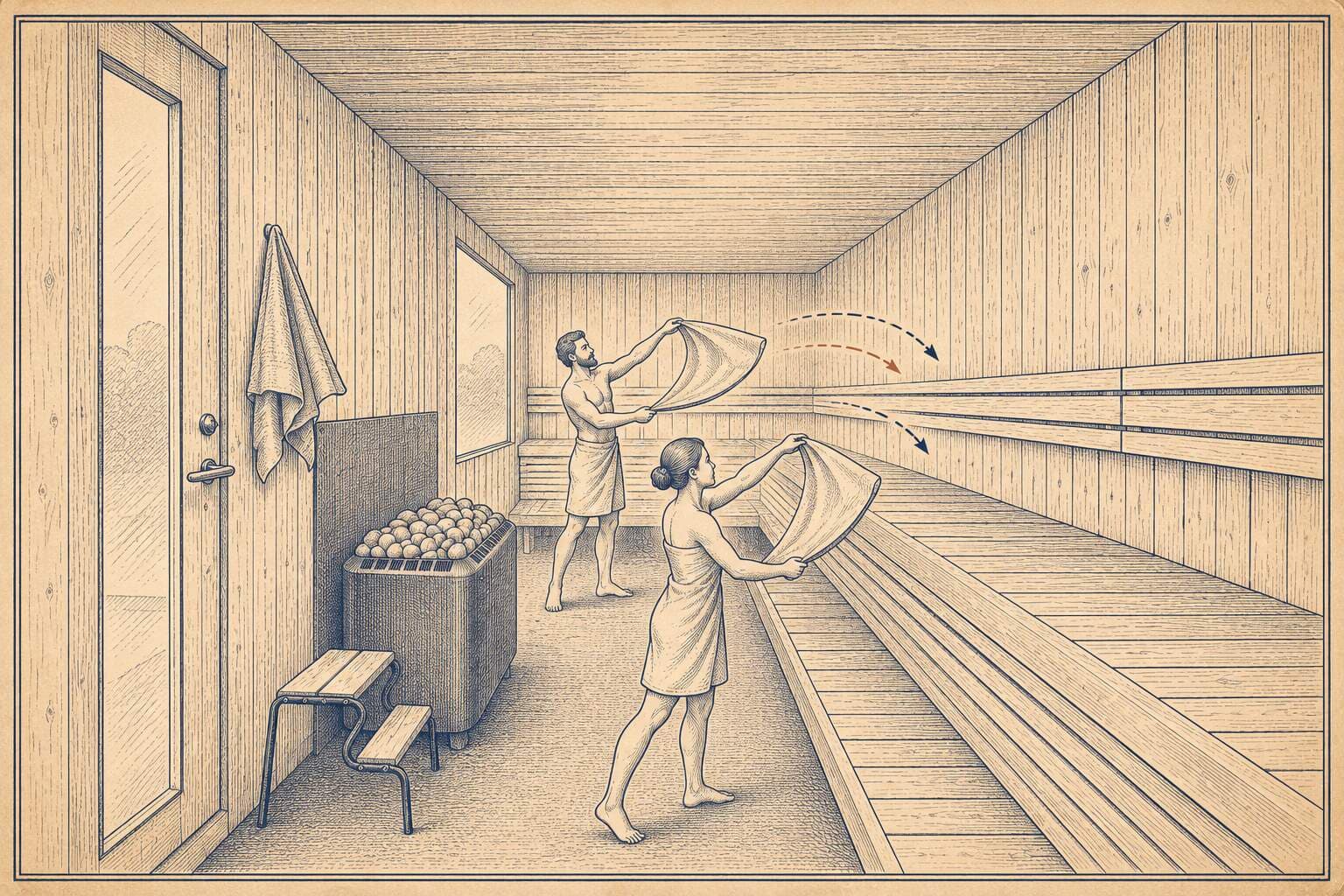
To become a gusmester, start by experiencing saunagus as a guest, then learn how to guide a room and practise the craft yourself. At Heat Harmony, our gusmester training combines theory with towel and fan work, scent, music and a practice round with fellow students. The first step does not require you to have led a group before. It does ask for curiosity about the people sharing the heat with you.
What are you learning to do?
A gusmester guides a saunagus with water on hot stones, air moved by a towel or fan, scent and music. Those are visible tools. Less visible is the attention behind them: noticing when to add warmth, when to pause and whether guests need more space. Our separate article on what a gusmester does follows that role during a session. Here, the question is how you begin learning it.
Sit in a few different sessions and pay attention to more than your favourite song or the hottest wave. Notice how the gusmester introduces a round, moves air towards the lower benches and leaves quiet between movements. Feel what changes when you move to another seat. If the heat feels like enough, you can step out. Learning from the guest side includes respecting your own limits.
You can compare a Signature Gus with other formats on the booking page. Go as a guest, with no task to perform. Afterwards, write down one choice that made the room feel welcoming and one thing you would like to understand better. Those observations are a useful starting point for questions at a training.
How to become a gusmester through practice
Our training takes place in the sauna where we run sessions. It is one day of theory and hands-on practice. You work on when to pour water, how to use scents, and how to move heat with towels and fans. You also have a chance to guide a round for fellow students and your teacher, away from the pressure of a public session. The training page has the current details and available dates.
That practice round matters because the craft involves several decisions at once. A towel has weight and direction. Heat reaches different benches differently. A pause can change the feeling of the room without adding water. You can learn movements by watching, but you understand their effect when you try them and get feedback in the actual space.
In a published student interview on the training page, Sebastian describes learning the basics of toweling and fanning, along with how to conduct himself during a saunagus. Another graduate describes having the chance to facilitate a round despite feeling nervous. Those are accounts of their own training, not a promise that everyone will leave feeling confident. It is fine to practise a movement again or ask why a choice works.
Find your way of holding the room
Technique gives you options. It does not hand you a finished style. Listen to how different gusmesters use music and silence. Consider what you want guests to feel, then test whether your timing and movements support that intention. The aim is to guide people through heat with care, not to make them stay longer or endure more than they want.
Our teacher, Rebecca, says in her interview that she had no teaching experience before she began at Heat Harmony and still approaches the work as something to practise and learn. Her account is encouragement to start learning, not a shortcut past practice. It is also a reminder that a gusmester can keep refining the craft after the first training day.
House rules belong in that craft too. Guests must wash their whole body and hair with soap before entering the sauna, sit on a towel that covers the bench beneath body and feet, and stay quiet during a session. After a sauna round, they rinse off sweat in the shower before entering the cold water. Our FAQ and behaviour policy explain the rules in full. A person guiding a room should know what the guests are being asked to do.
Questions before you sign up
Do I need previous teaching experience?
Our training page says no previous experience is needed. Rebecca's own account is one example of learning through practice. Interest in facilitating matters, but the training still asks you to try the techniques and respond to feedback.
Is a gusmester the same as a gusmaster?
People use both spellings when they search for this role. On our site, we say gusmester. The work described here is guiding saunagus, whichever spelling brought you to the page.
Will the training lead to a job?
The training page describes a possible invitation to keep learning with the Heat Harmony team if there is a good match. It does not promise an invitation or a job. You can also learn the craft for your own use. Check the page for the current training offer before deciding what you want from it.
Where can I see dates and costs?
See gusmester training for available training dates and its booking details. For guest sessions, current prices and available classes live on their own pages. You can visit as a guest first, then decide whether you want to learn how to guide the room.