
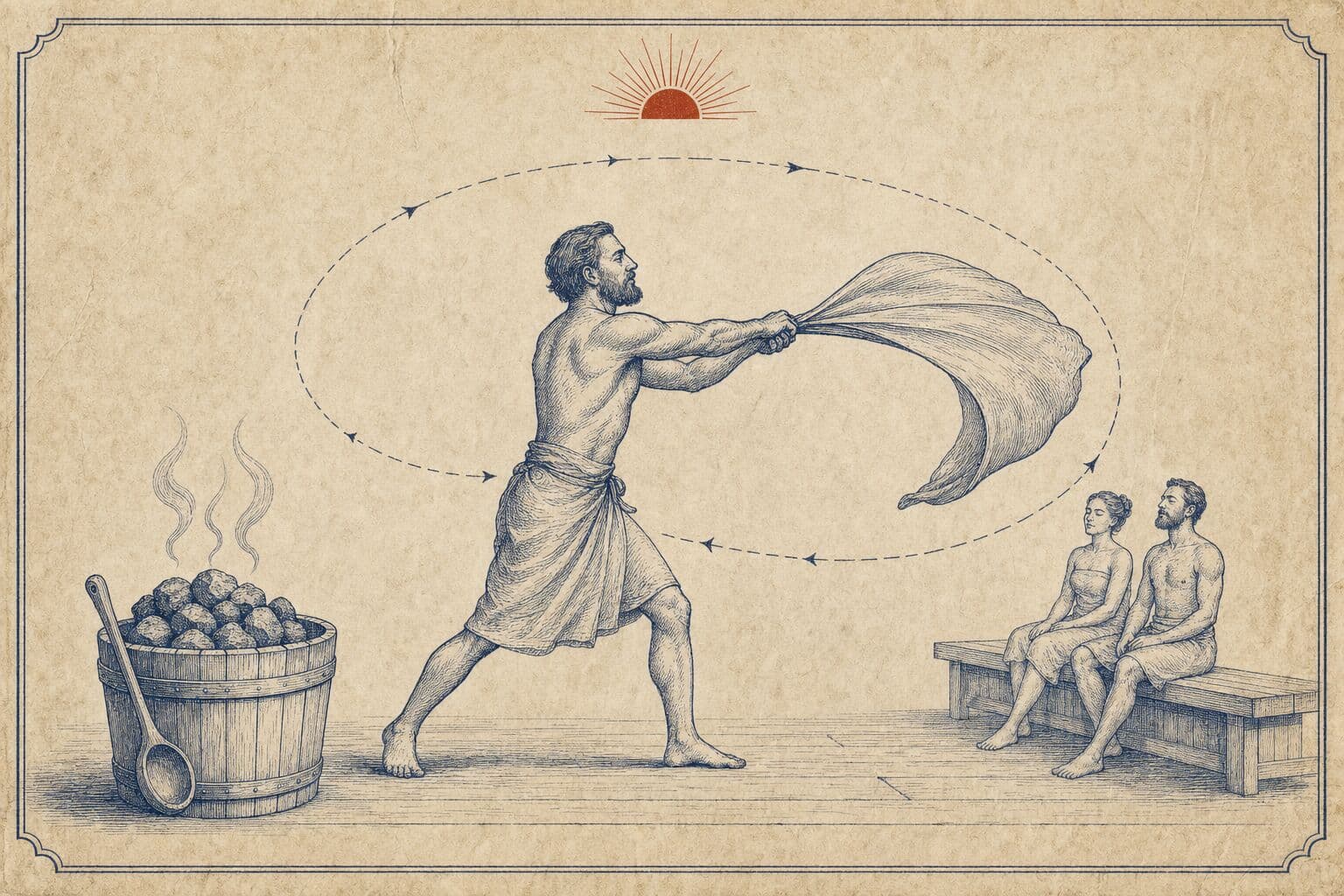
Saunagus is a guided sauna ritual. You sit in a hot sauna with a group of people, and one person stands in front of you with a bucket of water, a few essential oils and a towel. That person is the gusmester. They pour the water over the hot stones, the room fills with steam and scent, and then they use the towel to move that hot air through the room and over your skin. It runs in rounds, with time to cool down in between. That is the whole thing.
We run saunagus in Copenhagen, out in Nordvest, and this is the page we wish had existed the first time any of us heard the word.
What actually happens in the room
The sauna is dark and warm before anything starts. People sit on wooden benches, some talking quietly, most not. The gusmester says hello, explains what is coming, and gives you the two rules that matter: you can leave whenever you want, and if the heat gets to be too much you move down to a lower bench where the air is cooler.
Then comes the first pour. Water mixed with essential oils goes onto the hot stones. For a second nothing happens. Then the scent arrives, and right behind it the heat.
The towel is the part people do not expect. Hot air sits up at the ceiling and stays there unless someone moves it. The gusmester moves it. Big slow circles, sharp snaps, waves sent down the row. You feel the heat arrive in waves, on your ears and your shoulders first.
Between the rounds you step out, cool down, drink water and come back in. Some people go straight for cold water, others just stand in the fresh air for a minute. Nobody is timing you.
The oils do more to a room than you would think. Eucalyptus is the one most people recognise, sharp and green, and it makes your breathing feel wider than it did a minute ago. Citrus wakes a room up. A gusmester picks the oils, the music and the pace so that one session holds together, which is why two sessions at the same temperature can feel like completely different evenings.
What a first session feels like
Come fifteen minutes early. Tell the gusmester it is your first time.
The first minutes are calm. Then the water hits the stones and it gets serious.
Halfway through a round you will notice your own heartbeat. The heat is heavy, your skin is hot, and somewhere in there a small voice says this is a lot. That moment is normal and it passes. Breathe slower, move down a bench, or step outside.
At the end of a round the door opens and the cold air comes in like a bucket of water. People laugh. That contrast is half the reason anyone does this at all.
Afterwards is the part we like most. Voices are lower. Nobody reaches straight for a phone. You sit outside with wet hair, a bit stunned, and the day you walked in with is noticeably further away. Most people sleep well that night.
Where saunagus comes from
Nobody owns this history and the dates are approximate apart from our own, because the ritual spread by people doing it rather than by anyone writing it down.
The sauna has been part of everyday life in Finland for centuries. Finnish has a word for what happens when water hits the hot stones: löyly. It covers both the steam and the spirit people read into it. Everything we do today sits on top of that tradition.
The word saunagus is a Danish invention. In German-speaking countries the ritual is called Aufguss, and in Finland it is simply what happens when you throw water on the stones. In Denmark it became gus, and the person leading it became a gusmester.
Questions we get asked
What does saunagus cost?
It depends on whether you buy a single session or a pass. Current prices live on our pricing page.
Do I need experience?
No. There is always someone in the room who is there for the first or second time. There is no separate beginner version of saunagus: it is the same gus, where you sit low and take it easy.
What do I bring?
Swimwear, a towel and water. That is the list. If you forget the water, drink before and after instead, but do not skip it.
Is saunagus for everyone?
Heat is a real load on the body. If you are pregnant, have a heart condition, high or low blood pressure, or take medication that affects circulation, ask your doctor before you book. Do not do saunagus after drinking alcohol. If you feel dizzy or unwell at any point, leave the room. This is a ritual, not a treatment, and nobody in there is impressed by someone who stays too long.
How is it different from a normal sauna?
A normal sauna is you and the heat. Saunagus is guided: someone chooses the oils, controls the heat, moves the air and shapes the session from the first pour to the last. Same room, very different experience.
Where to start
We run three formats. Signature Gus is the classic middle: warm, aromatic, evenly paced. Relaxed Gus is softer and slower. Energizing Gus is the loud one, more heat and more movement. First time, most people pick Signature or Relaxed.
Find a time on the schedule and turn up fifteen minutes early. If something is still unclear, the FAQ covers the practical bits, and you can always ask us at the door.